The MDX module
2-zone motor-driven-roller zone controller. Sealed enclosure, DIN-rail-mounted beside its rollers — every field connection a keyed cordset.
One continuous moulded shell — no lid, no seam on any face you can see. It clips on and off a DIN rail, so a whole module swaps out in seconds with no tools at the box.
An OLED reads out node address, named faults and live speed; three light-piped LEDs beside it — power, module status and network status — stay lit through an E-stop. A line tech reads state without a laptop.
Keyed power, motor and network cordsets — no cabinet, no home-run wiring. Power and network daisy-chain module-to-module down the conveyor.
Each sensor port takes a second sensor through a splitter — four inputs on a two-zone module, with no extra hardware and no port left over. Photo-eye, proximity switch, whatever the install calls for. The second input has a role you set: a wake-up sensor that starts a sleeping zone early, a secondary presence check, or a second-case detector where a merge or cross-push can drop two cartons into one zone.
Every field connection lands on the module's own walls — nothing home-runs to a cabinet. Sensor ports are sealed and each takes two sensors through a splitter; power, motor and network are keyed connectors. Unused ports cap to hold IP54.
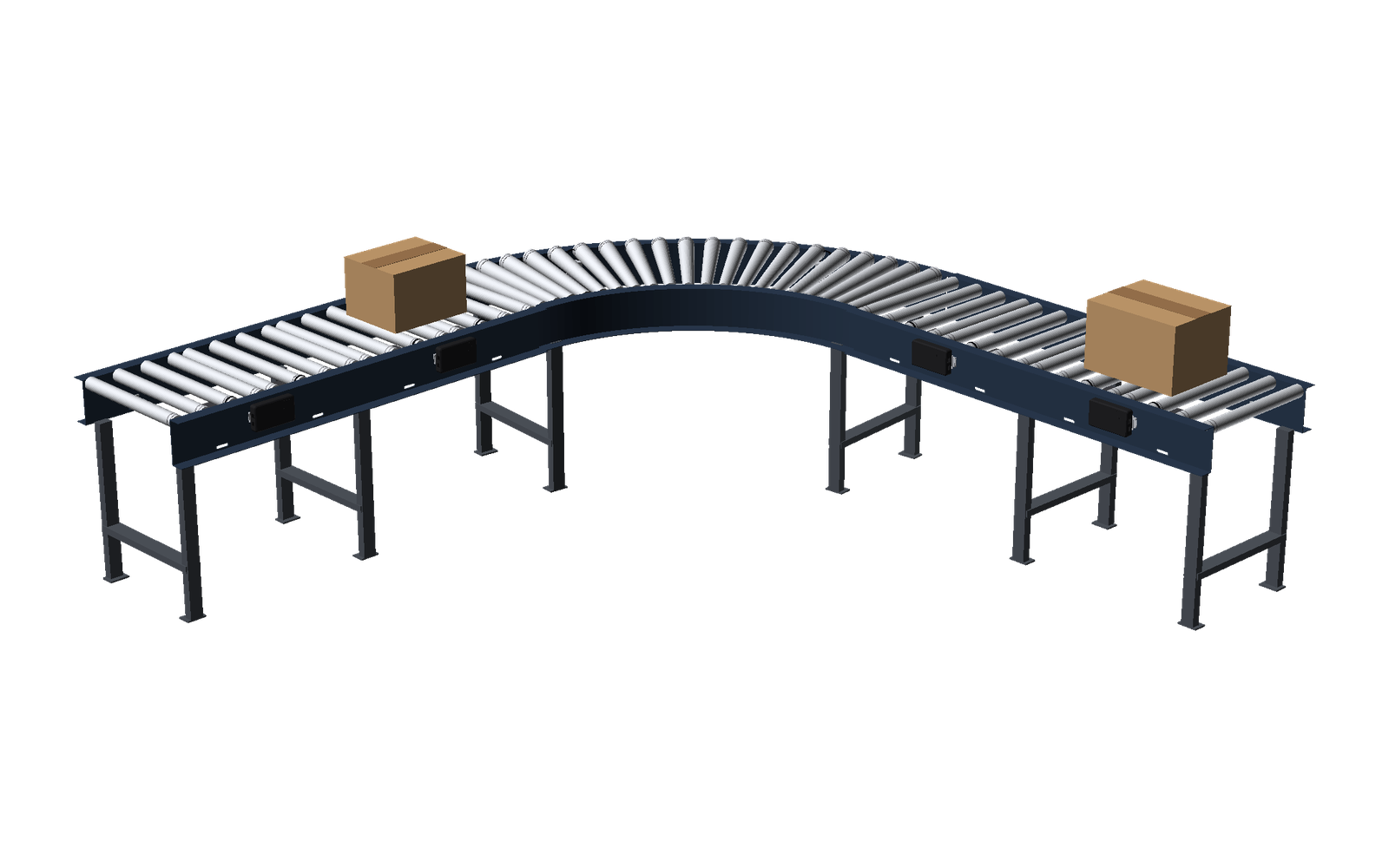
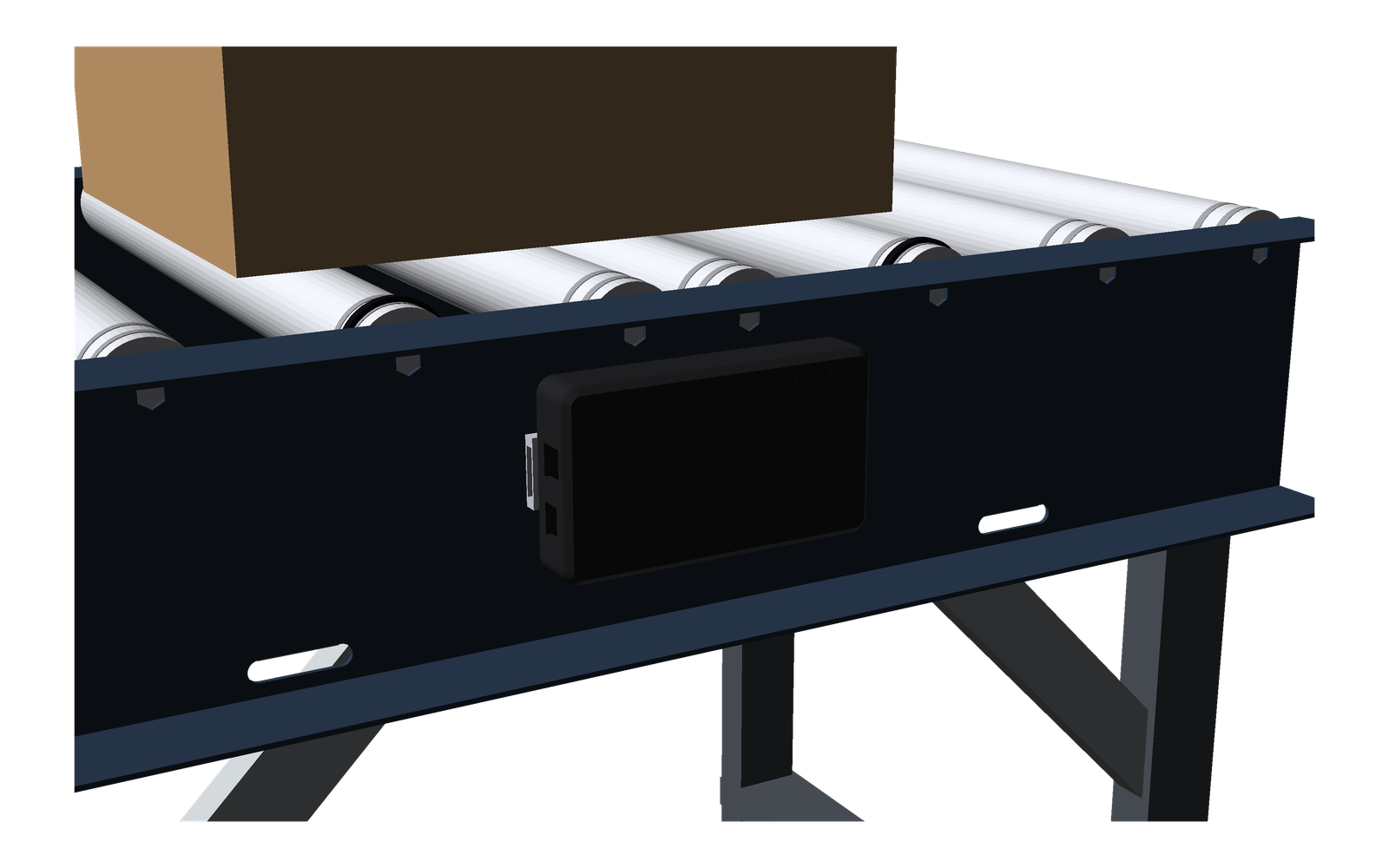
The module sits behind the conveyor's side face — inside the frame's shadow, clear of product and passing traffic.
Each module drives the two zones of its bay; sensor cordsets reach up to the rollers, power and network chain to its neighbors.
// CAD render — a four-section line with a 90° curve. The branded face + connector detail above; the installed context here.